
Exploring the Role of Montessori Furniture in Sensory

Have you ever wondered how the choice of furniture in a Montessori environment can significantly impact a child’s sensory development? Join us on a journey of discovery as we delve into the fascinating world of Montessori furniture and its profound influence on sensory development in early childhood.
Exploring the Role of Montessori Furniture in Sensory Development reveals that Montessori furniture is not just about aesthetics; it plays a crucial role in shaping a child’s sensory experiences. Montessori furniture is intentionally designed to engage a child’s senses, promoting sensory exploration, refinement, and development.
How does Montessori furniture promote sensory development?
One of the key aspects of Montessori furniture is its focus on sensory exploration. Each piece of furniture is carefully crafted to engage a child’s senses and provide opportunities for hands-on learning. For example, a sensory table with various textured materials allows children to experience different tactile sensations, thereby stimulating their sense of touch. Similarly, shelves with open compartments provide visual stimulation and encourage children to explore and categorize objects based on their visual attributes.
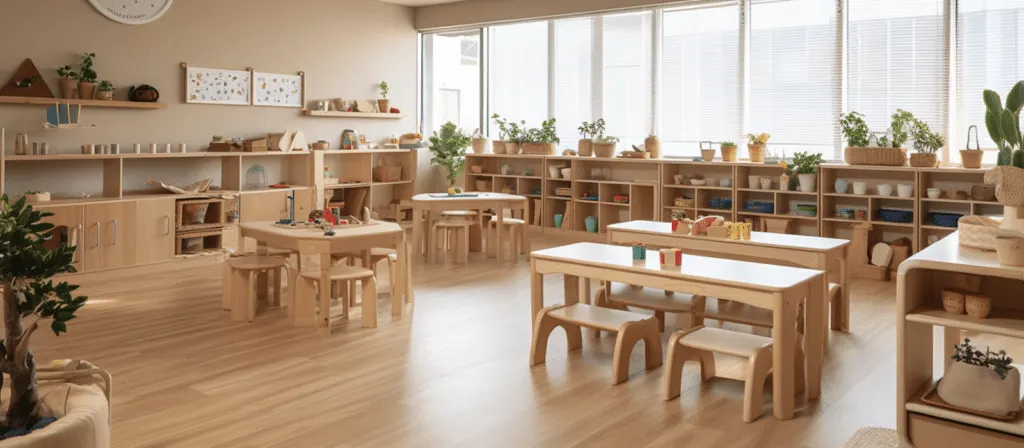
But how exactly does sensory development occur through the use of Montessori furniture?
Sensory development occurs when children actively engage with their environment and explore stimuli that are unique to each of their senses. Montessori furniture provides a conducive environment for such exploration by offering a range of materials, textures, colors, and shapes that cater to each sense. For instance, a wooden puzzle with different shapes not only enhances a child’s visual perception but also allows them to feel the texture of the wood and develop their sense of touch.
What are some specific examples of Montessori furniture that promote sensory development?
Montessori furniture encompasses a wide range of items, each designed to target specific sensory experiences. Here are a few notable examples:
- Sensory tables: These tables are equipped with various materials such as sand, water, or rice, providing children with opportunities to explore different textures and engage in sensory play.
- Practical life shelves: These shelves are stocked with objects that promote fine motor skills and hand-eye coordination, such as pouring activities, sorting tasks, and buttoning frames.
- Art stations: These stations provide children with a creative outlet, allowing them to explore different art materials, colors, and textures, thereby stimulating their visual and tactile senses.
- Soft seating areas: These cozy seating areas, equipped with soft cushions and rugs, offer a comfortable space for children to relax, read, and engage in imaginative play.
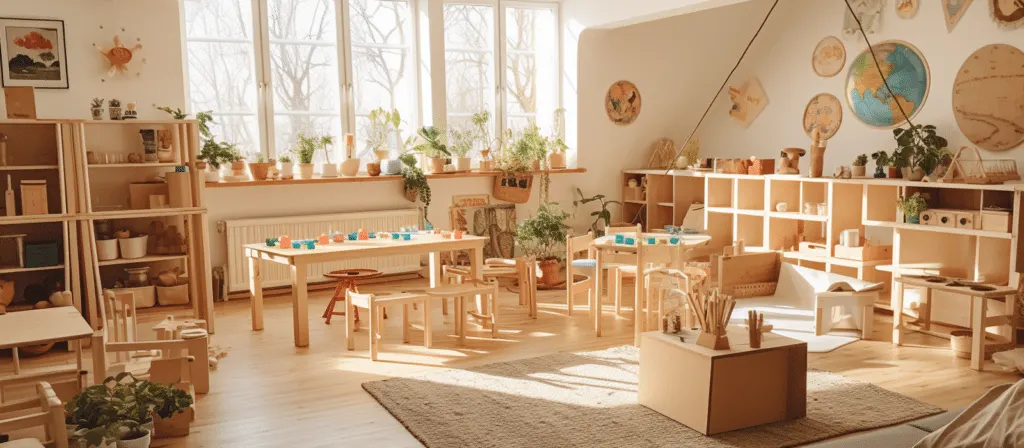
How does Montessori furniture support sensory development in different areas?
1. Visual Development
Montessori furniture often incorporates visually stimulating materials and colors. The use of natural materials and aesthetically pleasing designs helps children develop their visual perception and aesthetics.
2. Auditory Development
Montessori furniture is designed to minimize noise and distractions, creating a calm and peaceful learning environment. This allows children to focus on auditory stimuli and develop their listening skills.
3. Tactile Development
The use of different textures in Montessori furniture, such as wooden surfaces, fabric, and natural fibers, provides children with opportunities to explore and develop their sense of touch.
4. Gross and Fine Motor Skills Development
The child-sized furniture in Montessori classrooms promotes the development of gross motor skills as children move around the classroom and engage in physical activities. Additionally, the use of various Montessori materials, such as puzzles and manipulatives, supports the development of fine motor skills.
Conclusion
In conclusion, Montessori furniture plays a crucial role in sensory development. It supports independence, order, and movement while providing a rich sensory experience for children. While more research is needed to specifically study the impact of Montessori furniture on sensory development, the principles behind Montessori education and the benefits of child-centered environments are well-established. By investing in Montessori furniture, parents and educators can create an environment that nurtures sensory development and empowers children to become active and engaged learners.

Hey, I’m Roger, the founder of Xiha Montessori, a family-run business. We specialize in preschool furniture and educational solutions.
Over the past 20 years, we have helped clients in 55 countries and 2000+ preschools, daycares, and early childcare centers create safe and inspiring learning environments.
This article shares knowledge on making education more effective and enjoyable for children.

Wooden Preschool Furniture Care Guide For Busy Classrooms
Read More »
How to Childproof a Daycare Classroom: A Practical Safety Checklist
Read More »
Daycare Cribs Buying Guide: How to Choose Safe, Practical Sleep Furniture
Read More »
Object Permanence: What Babies Learn and How Montessori Activities Support It
Read More »
Effective Preschool Classroom Rules: How to Create a Safe and Orderly Learning Environment
Read More »
How to Start a Daycare: A Practical Planning Guide
Read More » Roger Cai
Education Specialists
Hey, I’m the author of this post.
Over the past 20 years, we have helped 55 countries and 2000+ Clients, like Preschools, Daycare, and Early Childcare Centres, to create safe and inspiring learning environments.
If you need a purchase or consultation, please contact us for a free product catalog and classroom layout design.