
30 Common Motor Skills Activities for Preschoolers
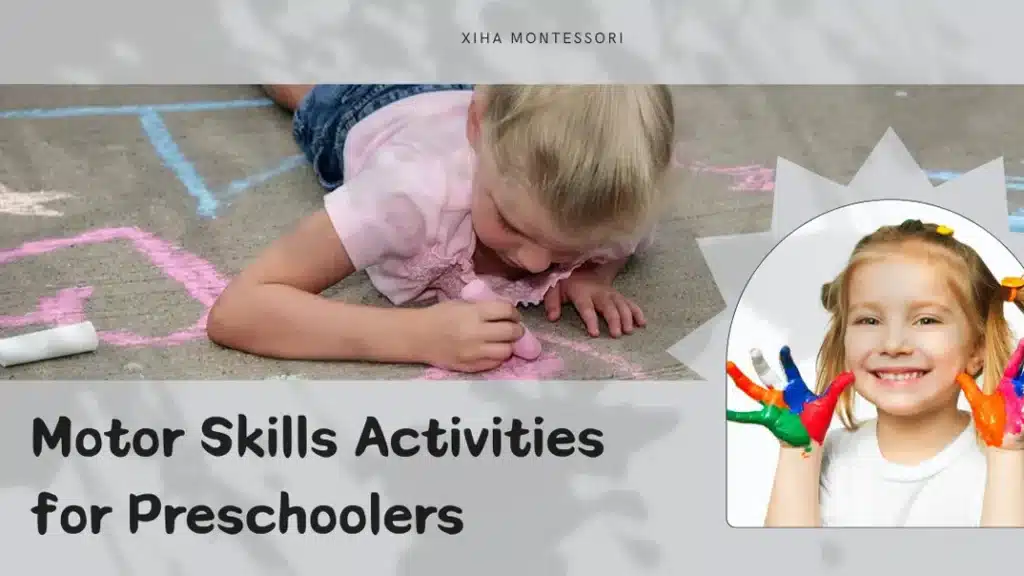
Are you looking for fun and educational activities to help your preschooler develop their motor skills? In this post, we’ve compiled a list of 30 common motor skills activities perfect for preschoolers.
Engaging in motor skills activities during the early years is crucial to your child’s overall development. Not only do these activities help strengthen their muscles, but they also enhance their cognitive abilities. Preschoolers can improve their fine and gross motor skills and coordination through play and movement.
Each motor skills activity is easy to set up and requires minimal equipment, making it accessible. Plus, they can be done indoors and outdoors, adding variety and excitement to your preschooler’s daily life. So get ready to have fun while helping your little one improve their motor skills and watch your preschooler blossom physically and intellectually.

15 Fine Motor Skills Activities
1. Cutting and Pasting Stickers
Cutting and pasting stickers help children develop hand-eye coordination and fine motor skills. They learn to use scissors safely and precisely while having fun creating art.
2. Putty or Play Dough
Playing with putty or play dough strengthens the muscles in children’s hands and fingers. This activity enhances fine motor skills as they roll, squeeze, and shape the dough. Tools like cookie cutters and rolling pins can improve dexterity and creativity.
3. Holding Things with Tweezers
Using tweezers to pick up small objects greatly improves fine motor skills and hand strength. Activities like sorting beads or transferring pom-poms can make this practice engaging.
4. Playing with Puzzles and Legos
Working with puzzles and Legos is an excellent way to improve fine and gross motor skills. Handling the pieces, fitting them into the correct spots, and building structures enhance spatial awareness and finger strength.
5. Coloring and Drawing
Providing various drawing and coloring tools, such as crayons, markers, and colored pencils, allows children to practice their grip and fine motor skills. Encouraging free drawing or coloring within the lines enhances creativity and precision.
6. Use Syringes and Droppers to Create Artwork
Using syringes and droppers to create artwork helps develop fine motor control and coordination. This activity also introduces children to the concept of fluid dynamics in a fun way.
7. Threading
Threading activities like lacing cards or threading pasta onto strings encourage hand-eye coordination and precision. These activities refine motor control and concentration.
8. Beading and Threading
Beading necklaces and threading beads onto strings enhance fine motor skills and hand-eye coordination. These activities require precise finger movements, improving dexterity and focus.
9. Dot-to-Dot
Dot-to-dot activities help children develop fine motor skills and hand-eye coordination. Connecting the dots requires controlled hand movements and concentration.
10. Bursting Bubbles
Bursting bubbles is a fun way to improve hand-eye coordination and reflexes. Children can chase and pop bubbles, enhancing their gross motor skills.
11. Buttoning and Zipper Practice
Teaching children to button shirts and zip jackets builds fine motor skills and independence. These activities require precise finger movements and hand strength, essential for everyday tasks.
12. Attaching Clothespins to Clothing
Attaching clothespins to clothing or a line helps develop finger strength and fine motor control. This simple activity can be made into a game to keep children engaged.
13. Playing with Sponges
Playing with sponges, like squeezing them in water, helps develop hand strength and fine motor skills. It’s a fun, sensory-rich activity that also teaches children about absorption.
14. Finger Painting
Finger painting allows children to explore creativity while strengthening their hand and finger muscles. The sensory-rich activity promotes fine motor skills as they manipulate the paint.
15. Shredding or Crumpling Paper
Shredding or crumpling paper is a simple yet effective activity for developing hand strength and fine motor skills. It also provides a fun, tactile experience for children.
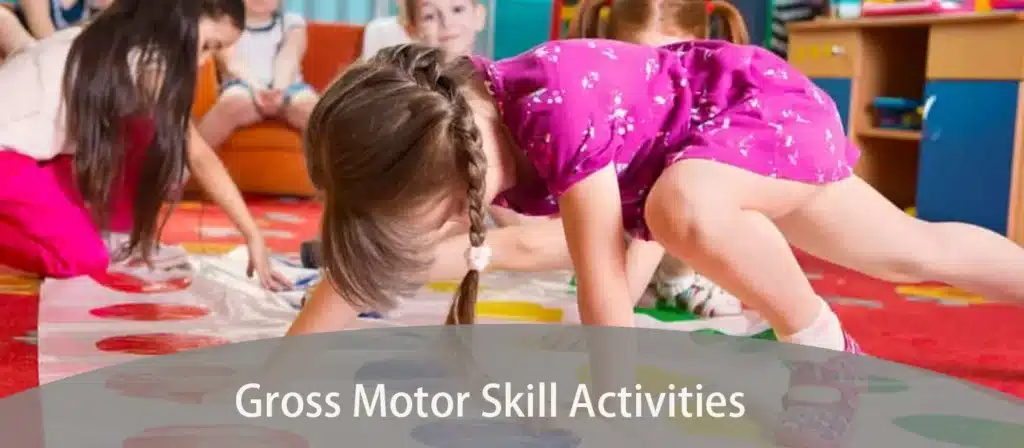
15 Gross Motor Skills Activities
1. Obstacle Course Adventures
Creating obstacle courses with various challenges helps develop gross motor skills. Children can crawl under tables, jump over cushions, and navigate through cones, enhancing their coordination and problem-solving skills.
2. Hopscotch Fun
Playing hopscotch is great for developing gross motor skills, balance, and coordination. It also encourages children to practice their counting skills.
3. Balloon Volleyball
Balloon volleyball is a fun activity that improves hand-eye coordination and gross motor skills. Children can play individually or in teams, practicing their reflexes and balance.
4. Nature Scavenger Hunts
Nature scavenger hunts encourage children to explore their environment while developing gross motor skills. Searching for items on a list promotes movement, observation, and critical thinking.
5. Dance Party Extravaganza
Dance parties where children can move freely to music enhance gross motor skills and rhythm. It encourages physical activity and creative expression.
6. Kickball Kickoff
Playing kickball helps develop gross motor skills, coordination, and teamwork. It’s a fun, energetic game that encourages physical fitness and social interaction.
7. Hula Hoop Twirl
Using hula hoops helps improve coordination, balance, and core strength. Children can have fun keeping the hoop spinning, enhancing their physical skills.
8. Sensory Pathway Exploration
Creating a sensory pathway with different textures and obstacles encourages children to explore with their senses and develop gross motor skills. It’s an engaging way to promote movement and sensory integration.
9. Bike Ride Adventure
Riding bikes enhances gross motor skills, balance, and coordination. It’s a fun way for children to exercise while developing important physical abilities.
10. Jumping Jacks Jamboree
Jumping jacks are a great way to improve gross motor skills, coordination, and cardiovascular health. They’re a fun, energetic exercise that children can do individually or in groups.
11. Playing The Floor Is Lava
Playing “The Floor Is Lava” encourages children to use their imagination while developing gross motor skills. They must navigate a space without touching the ground, promoting balance and coordination.
12. Pull and Push Big Toys
Pulling and pushing big toys helps develop gross motor skills and strength. This activity encourages children to use their muscles and coordination to move objects.
13. Yoga for Kids
Simple yoga poses for children can improve balance, coordination, and flexibility. It’s a calming activity that promotes physical and mental well-being.
14. Play Catch
Playing catch improves hand-eye coordination, reflexes, and gross motor skills. It’s a classic game that encourages physical activity and social interaction.
15. Participate in Water Games
Participating in water games, such as water balloon toss or sprinkler play, enhances gross motor skills and coordination. These activities are fun and refreshing, especially on hot days.
In conclusion
These activities provide a comprehensive approach to developing preschoolers’ fine and gross motor skills. By incorporating various exercises, children can enhance their physical abilities while having fun.
Share this article:
Hey, I’m Roger, the founder of Xiha Montessori, a family-run business. We specialize in preschool furniture and educational solutions.
Over the past 20 years, we have helped clients in 55 countries and 2000+ preschools, daycares, and early childcare centers create safe and inspiring learning environments.
This article shares knowledge on making education more effective and enjoyable for children.
Wooden Preschool Furniture Care Guide For Busy Classrooms
Read More »
How to Childproof a Daycare Classroom: A Practical Safety Checklist
Read More »
Daycare Cribs Buying Guide: How to Choose Safe, Practical Sleep Furniture
Read More »
Object Permanence: What Babies Learn and How Montessori Activities Support It
Read More »
Effective Preschool Classroom Rules: How to Create a Safe and Orderly Learning Environment
Read More »
How to Start a Daycare: A Practical Planning Guide
Read More » Roger Cai
Education Specialists
Hey, I’m the author of this post.
Over the past 20 years, we have helped 55 countries and 2000+ Clients, like Preschools, Daycare, and Early Childcare Centres, to create safe and inspiring learning environments.
If you need a purchase or consultation, please contact us for a free product catalog and classroom layout design.