
What outcomes should parents expect from early childhood education and care?
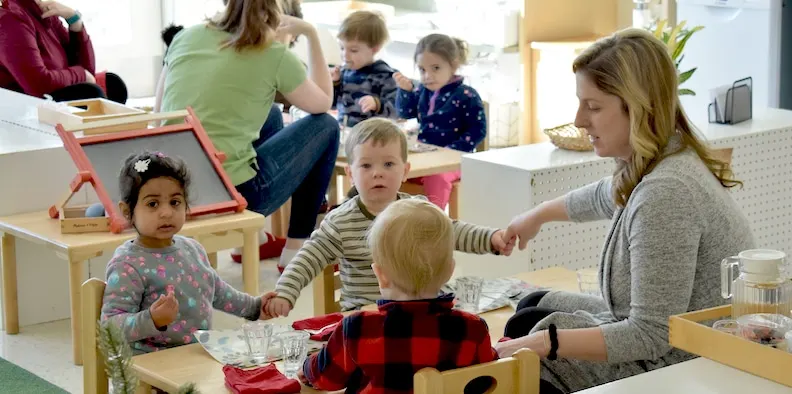
As the name suggests, early childhood education and care services are focused on providing learning opportunities and care for young children. In practice, this means each service helps preschoolers to develop key behaviours and achieve certain learning outcomes in the years before they go to ‘big school’.
Let’s look at the main developmental areas for preschoolers and what you can expect your little learner to achieve in a high quality early childhood setting.
In what ways do young children develop?
Between the ages of three and five, preschoolers are taking leaps and bounds – and not just with their bodies, but with their minds as well.
The Australian Children’s Early Childhood Quality Authority (ACECQA) identifies five developmental areas for children, namely:
- Physical
- Social
- Emotional
- Cognitive
- Language development
Although every child will progress at their own pace, ACECQA has created a list of developmental milestones based on each of these areas. These milestones provide a good indication of how your child is developing for their age and because the milestones are tied to the early childhood education curriculum and the National Quality Standards, they’re a clear way to measure how your child’s behaviour relates to specific learning outcomes.
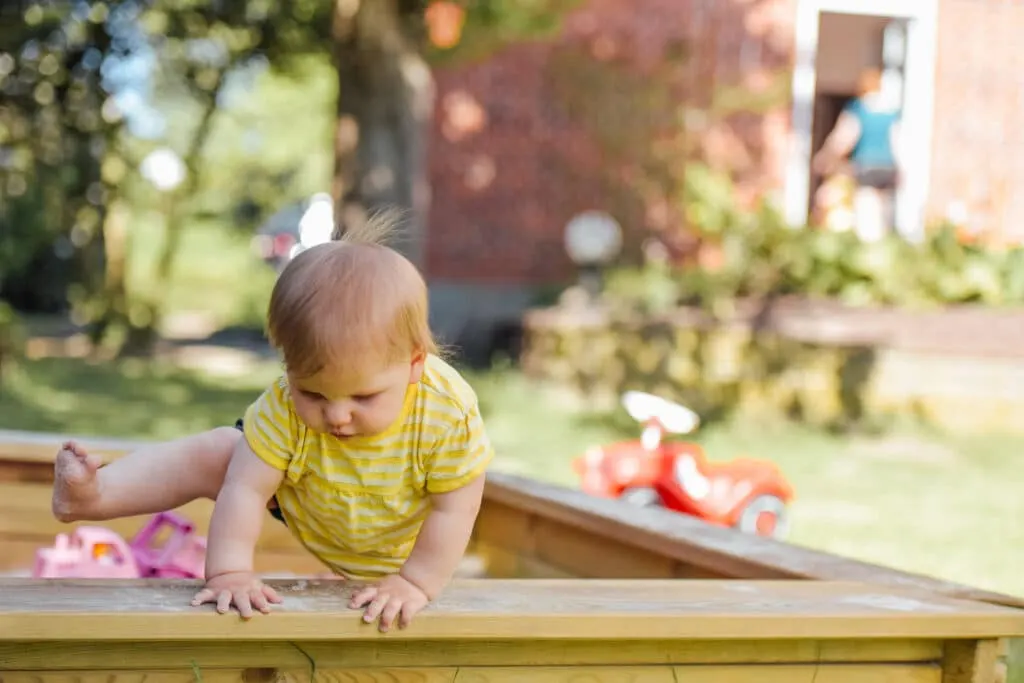
What do we mean by ‘learning outcomes’?
The Early Years Learning Framework is the curriculum that underpins each early childhood education and care service, and this Framework sets out five learning outcomes for educators and children to progress towards:
- Children have a strong sense of identity
- Children are connected with and contribute to their world
- Children have a strong sense of wellbeing
- Children are confident and involved learners
- Children are effective communicators
These learning outcomes take into account the different capabilities and experiences of children, and allow educators to share more complex ideas and learning experiences with your child as they develop.
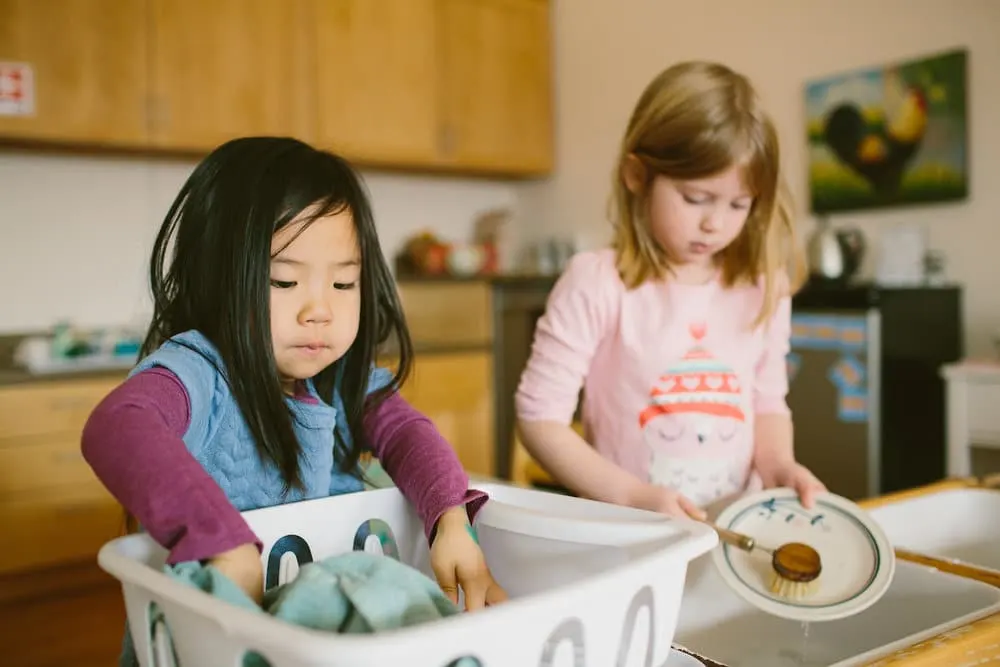
What behaviours and outcomes can parents of preschoolers expect?
ACECQA’s developmental milestones checklist is a helpful way to show the link between behaviours and learning outcomes. Here are some things you can expect between the ages of three and five:
| Developmental area | Key preschooler behaviour | Learning outcome associated with behaviour |
| Physical | • Needs little help dressing and undressing• Easily hops, skips and jumps• Holds a crayon/pencil between thumb and first two fingers• Shows a hand preference• Toilets independently• Climbs steps with alternating feet | Outcome 3: Children have a strong sense of wellbeing These behaviours show your child taking an ‘increasing responsibility for their own health and physical wellbeing’ |
| Social | • Enjoys playing with other kids• May have a particular friend• Shares, smiles and cooperates with peers• Develops independence and social skills | Outcome 1: Children have a strong sense of identity Here, your child is learning to interact with others with care, respect and empathy |
| Emotional | • Understands when someone is hurt and comforts them• Might prefer to play with same-sex children• May praise themselves and/or show aggression with peers• Likes to give and receive affection from parents | Outcome 2: Children are connected with and contribute to their world At preschool age, your child is learning to ‘respond to diversity with respect’ |
| Cognitive | • Understands opposites like hot and cold• Uses objects and materials to build such as an 8-10 block tower• Uses objects and materials to build such as an 8-10 block tower• Has a longer attention span• Counts five to 10 things• Matches colours• May write number or letters | Outcome 5: Children are effective communicators With these skills, your child is expressing ideas and making meaning using different media |
| Language | • Speaks in sentences• Tells stories, asks many questions• Experiments with new words and adult forms of speech• Enjoys jokes, rhymes and stories• Asserts self with words | Outcome 5: Children are effective communicators Here, your child is using ‘information and communication technologies to access information, investigate ideas and represent their thinking’ |
What non-behaviours might raise alarms bells?
The Early Years Learning Framework recognises that, ‘Each child will progress towards the outcomes in different and equally meaningful ways.’ However, it’s recommended that you seek professional advice if your three- to five-year-old:
- Is not understood by others
- Is stammering or has speech fluency problems
- Isn’t playing with other children
- Isn’t able to have a conversation
- Is not able to go to the toilet or wash themselves
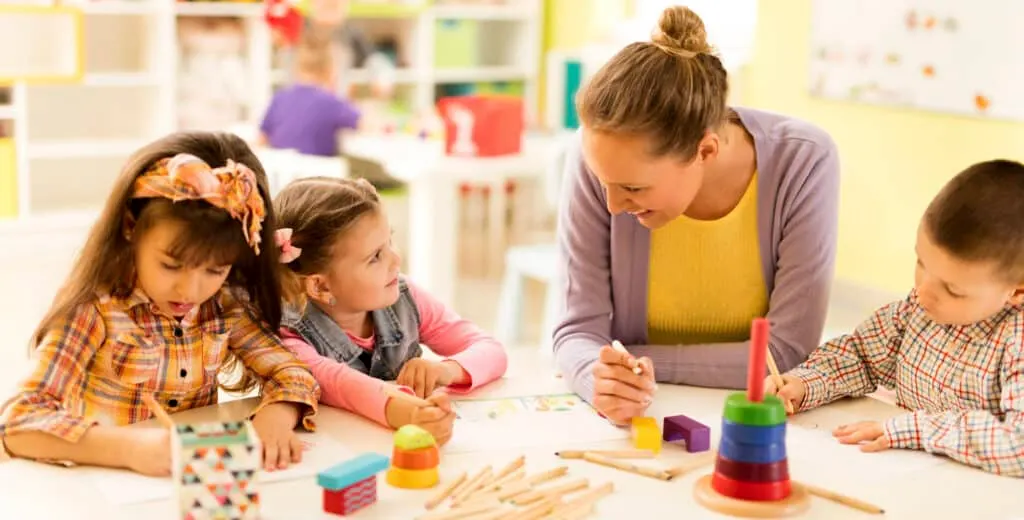
How does ‘play’ fit into the Early Years Learning Framework?
To engage your child’s five developmental areas, the Framework places particular emphasis on play-based learning. This is because play:
- Allows for the expression of personality and individualism
- Enhances curiosity and creativity
- Helps children make connections between past experiences and new learning
- Helps children develop concepts and relationships
- Encourages a sense of wellbeing
That said, there has been concern from educators and parents about the perceived decline of play-based learning in schools.
Murdoch University early childhood education lecturer, Dr Sandra Hesterman told the ABC that although, ‘Free play is the cornerstone of early childhood education,’ an academic focus is leaving young school children with more stress and less playtime.

Hey, I’m Roger, the founder of Xiha Montessori, a family-run business. We specialize in preschool furniture and educational solutions.
Over the past 20 years, we have helped clients in 55 countries and 2000+ preschools, daycares, and early childcare centers create safe and inspiring learning environments.
This article shares knowledge on making education more effective and enjoyable for children.
Wooden Preschool Furniture Care Guide For Busy Classrooms
Read More »
How to Childproof a Daycare Classroom: A Practical Safety Checklist
Read More »
Daycare Cribs Buying Guide: How to Choose Safe, Practical Sleep Furniture
Read More »
Object Permanence: What Babies Learn and How Montessori Activities Support It
Read More »
Effective Preschool Classroom Rules: How to Create a Safe and Orderly Learning Environment
Read More »
How to Start a Daycare: A Practical Planning Guide
Read More » Roger Cai
Education Specialists
Hey, I’m the author of this post.
Over the past 20 years, we have helped 55 countries and 2000+ Clients, like Preschools, Daycare, and Early Childcare Centres, to create safe and inspiring learning environments.
If you need a purchase or consultation, please contact us for a free product catalog and classroom layout design.