
Enhancing Fine Motor Skills with Montessori Furniture and Materials
As a parent or educator, you want to provide the best learning experiences for your child or student. One important aspect of development is fine motor skills, which are essential for everyday activities such as writing, buttoning clothes, and using utensils. Montessori furniture and materials can be valuable tools in enhancing fine motor skills in children. Let me explain how.
Montessori education emphasizes hands-on learning and allows children to explore and discover at their own pace. Furniture and materials are designed to be accessible and child-sized, allowing children to manipulate them easily. For example, a Montessori-inspired table and chair set will be lower to the ground, allowing children to sit with their feet on the ground and have better posture. This encourages proper alignment and reduces fatigue, making it easier for children to focus on tasks that require fine motor skills.
Montessori materials are carefully selected to promote learning and development. They are designed to isolate specific skills and provide a clear understanding of concepts. For example, a set of knobbed cylinders will help children develop their pincer grasp and hand-eye coordination. The cylinders are different sizes and require varying degrees of pressure to fit into their corresponding holes. This activity strengthens the muscles in the hand and fingers, preparing them for more complex tasks such as writing.
Montessori furniture and materials also promote independence and self-confidence. Children are encouraged to choose their own activities and work independently. This builds self-esteem and a sense of accomplishment, which in turn motivates them to continue learning. As children progress, they can work on more challenging activities that require greater dexterity and precision.
What are Fine Motor Skills?
Before we dive into how Montessori furniture and materials can enhance fine motor skills, let’s first define what fine motor skills are. Fine motor skills refer to the ability to use small muscles in the hands, fingers, and wrists to perform precise movements. These movements include tasks such as writing, drawing, buttoning clothes, and using utensils to eat. Developing strong fine motor skills is essential for children as it allows them to perform everyday tasks with ease and prepares them for more complex activities in the future.
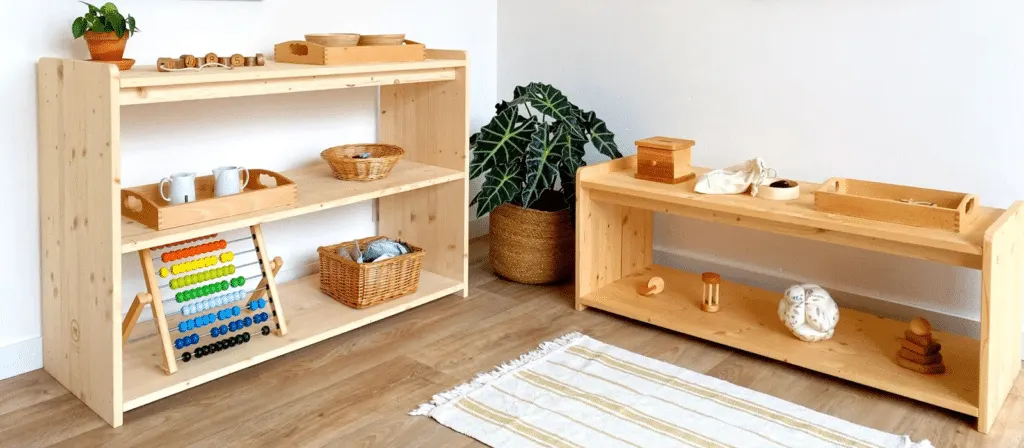
How can Montessori furniture and materials enhance fine motor skills?
Montessori furniture and materials are designed to be child-sized and accessible. This allows children to manipulate them easily and encourages proper alignment and posture. Furniture such as tables and chairs are lower to the ground, allowing children to sit with their feet on the ground and have better posture. This reduces fatigue and makes it easier for children to focus on tasks that require fine motor skills.
Montessori materials are carefully selected to promote learning and development. They are designed to isolate specific skills and provide a clear understanding of concepts. For example, a set of knobbed cylinders will help children develop their pincer grasp and hand-eye coordination. The cylinders are different sizes and require varying degrees of pressure to fit into their corresponding holes. This activity strengthens the muscles in the hand and fingers, preparing them for more complex tasks such as writing.
Montessori furniture and materials also promote independence and self-confidence. Children are encouraged to choose their own activities and work independently. This builds self-esteem and a sense of accomplishment, which in turn motivates them to continue learning. As children progress, they can work on more challenging activities that require greater dexterity and precision.
Other Benefits of Montessori Furniture and Materials
In addition to enhancing fine motor skills, Montessori furniture and materials also offer other benefits. For one, they promote independence in children. By using child-sized furniture and materials, children can easily access and use them without the need for adult assistance. This fosters a sense of independence and self-reliance in children.
Montessori furniture and materials also encourage creativity and imagination. Many of the materials have multiple uses and can be used in a variety of ways. This allows children to explore and experiment, which promotes creativity and imagination.
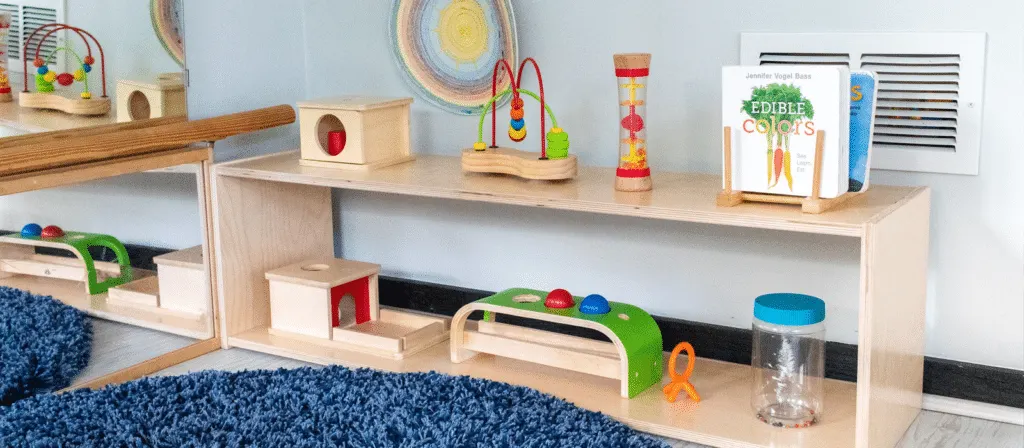
What are some examples of Montessori furniture and materials?
Montessori furniture and materials can range from simple to complex, and can be used for different age groups. Here are some examples:
Montessori-Inspired Table and Chair Set
A Montessori-inspired table and chair set is designed to be child-sized and accessible. The table is lower to the ground, allowing children to sit with their feet on the ground and have better posture. The chairs are also lower, allowing children to sit with their knees at a 90-degree angle. This encourages proper alignment and reduces fatigue, making it easier for children to focus on tasks that require fine motor skills.
Practical Life Materials
Practical life materials are activities that children can do to develop independence and life skills. Examples include pouring water, washing dishes, and folding clothes. These activities promote hand-eye coordination, hand strength, and concentration.
Sensorial Materials
Sensorial materials are designed to isolate specific senses and promote development. Examples include knobbed cylinders, geometric solids, and color tablets. These activities promote hand-eye coordination, fine motor skills, and the ability to discriminate between different sizes, shapes, and colors.
Language and Math
Materials Language and math materials are designed to teach specific concepts and promote cognitive development. Examples include sandpaper letters, movable alphabet, and bead bars. These activities promote hand-eye coordination, fine motor skills, and the ability to recognize letters, numbers, and patterns.
Montessori furniture and materials can be valuable tools in enhancing fine motor skills in children. They are designed to be child-sized and accessible, promoting proper alignment and reducing fatigue. Materials are carefully selected to promote learning and development, and encourage independence and self-confidence. By providing children with the right tools and environment, we can help them develop the fine motor skills they need to succeed in everyday life.

Hey, I’m Roger, the founder of Xiha Montessori, a family-run business. We specialize in preschool furniture and educational solutions.
Over the past 20 years, we have helped clients in 55 countries and 2000+ preschools, daycares, and early childcare centers create safe and inspiring learning environments.
This article shares knowledge on making education more effective and enjoyable for children.

Wooden Preschool Furniture Care Guide For Busy Classrooms
Read More »
How to Childproof a Daycare Classroom: A Practical Safety Checklist
Read More »
Daycare Cribs Buying Guide: How to Choose Safe, Practical Sleep Furniture
Read More »
Object Permanence: What Babies Learn and How Montessori Activities Support It
Read More »
Effective Preschool Classroom Rules: How to Create a Safe and Orderly Learning Environment
Read More »
How to Start a Daycare: A Practical Planning Guide
Read More » Roger Cai
Education Specialists
Hey, I’m the author of this post.
Over the past 20 years, we have helped 55 countries and 2000+ Clients, like Preschools, Daycare, and Early Childcare Centres, to create safe and inspiring learning environments.
If you need a purchase or consultation, please contact us for a free product catalog and classroom layout design.